Key Skill Achievements
Project Info
🎯 Project goal: Release an awesome game for players to enjoy and spend money on.
👨👨👧👧 Target audience: Casual Crossword Players
📺 Platform: Android & iOS
👩🏻💻 Language: C#
⏳ Timeline: 2 years


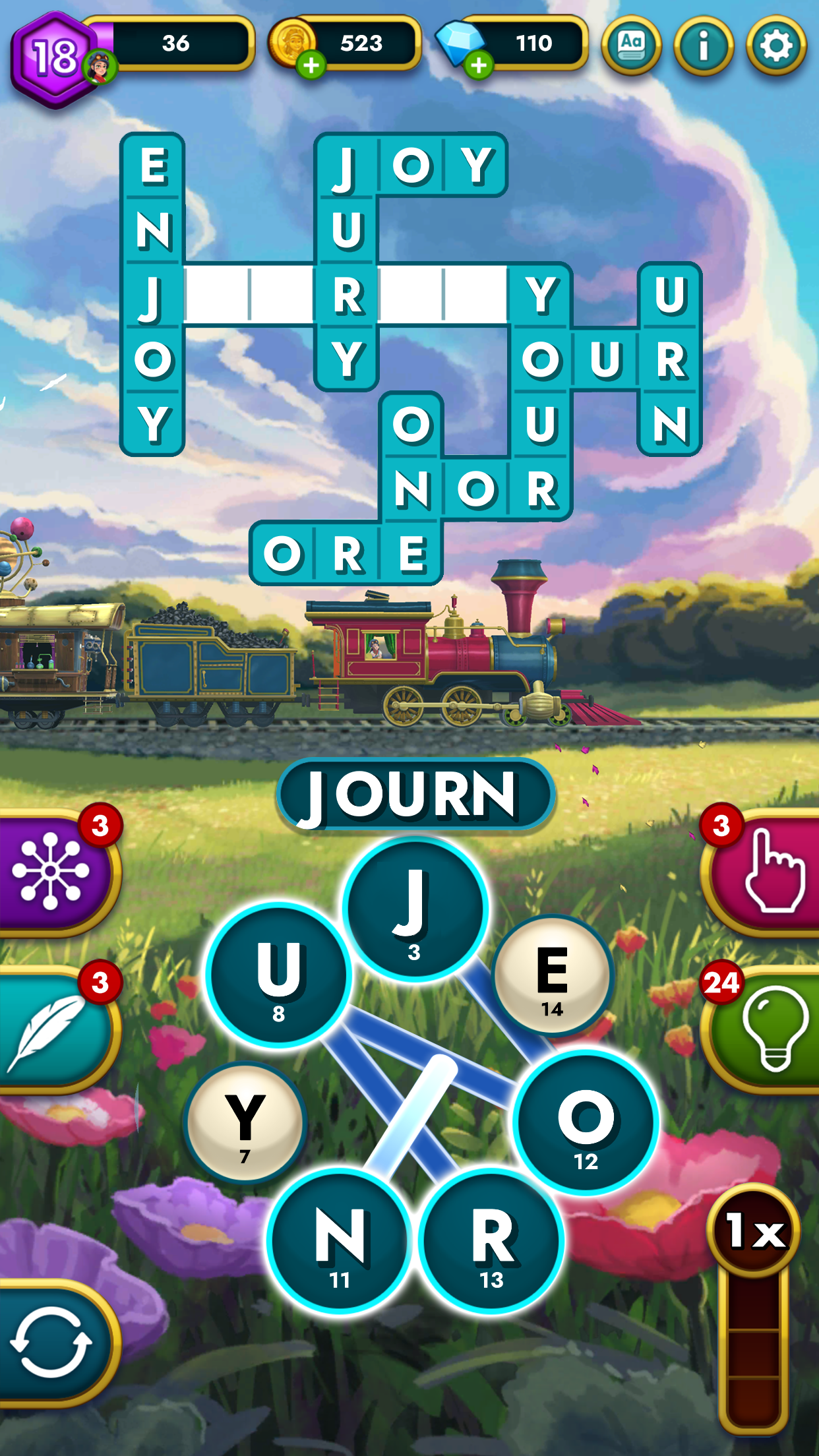
During my time at GameHouse Original Stories, I worked on a LiveOps, story-driven crossword game: 'Text Express', mainly contributing to features aimed at increasing organic growth, retention, and long-term scalability. My work focused on LiveOps systems, social authentication, referral mechanics, and player communication tools, all designed to reduce user acquisition costs and enable future community-driven features in a production environment.
Gameplay:
My contributions:
I designed and implemented a complete social authentication system for Text Express,
integrating Google Play Games and Facebook Login with Playfab
to securely safeguard player progress and enable future social features.
The solution replaced device-based identification with account-linked authentication,
allowing players to restore progress across devices and significantly reducing the risk of data loss.
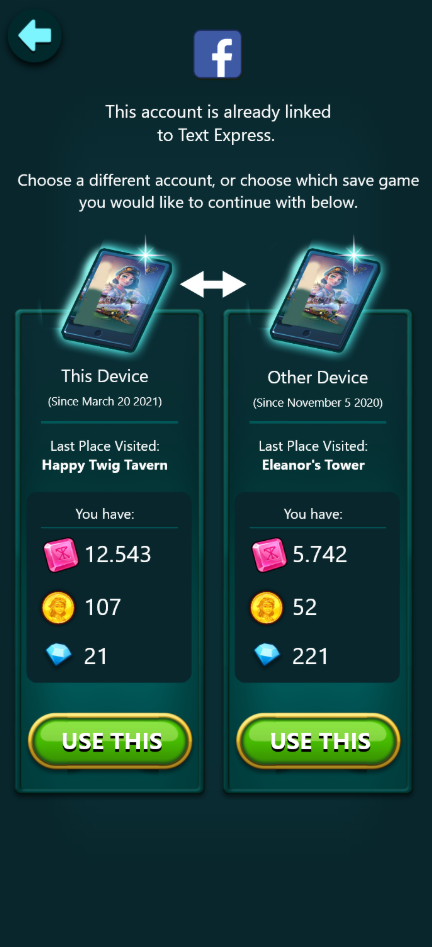
A key challenge was handling cases where a social account was already linked to a different Playfab ID.
I designed and implemented a progress comparison flow, enabling players to clearly choose which account
to continue with, supported by both frontend UI and backend data adjustments.
You can read more about how I built that in the design document for Social Authentication.
I designed and implemented a fully dynamic, backend-driven shop deals system for Text Express,
enabling designers to create, modify, and experiment with in-game offers without requiring client
updates.
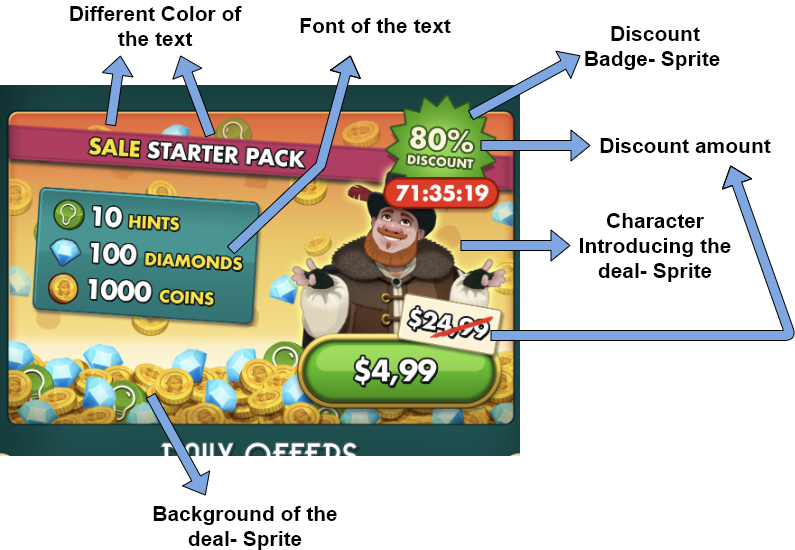
Previously, shop deals were partially dynamic and heavily hard-coded: while prices could be updated via Playfab,
any change to the deal’s contents or layout required a new game release. I addressed this limitation by introducing
a JSON-driven UI configuration system, allowing every visual and functional element of a deal—currencies, items,
text styling, templates, and discounts—to be controlled remotely from Playfab.
The system supports multiple deal templates (e.g. currency-only, customization-only), selected dynamically at runtime.
I designed a modular architecture following SOLID principles, separating core purchase logic from presentation logic and
allowing new deal types to be added by introducing new classes rather than extending monolithic ones. Shared visual assets
(e.g. currencies, characters, containers) were centralized through a
dedicated Sprite Provider, reducing coupling and improving extensibility.
You can read more about how I built that in the design document for Dynamic shop deals.
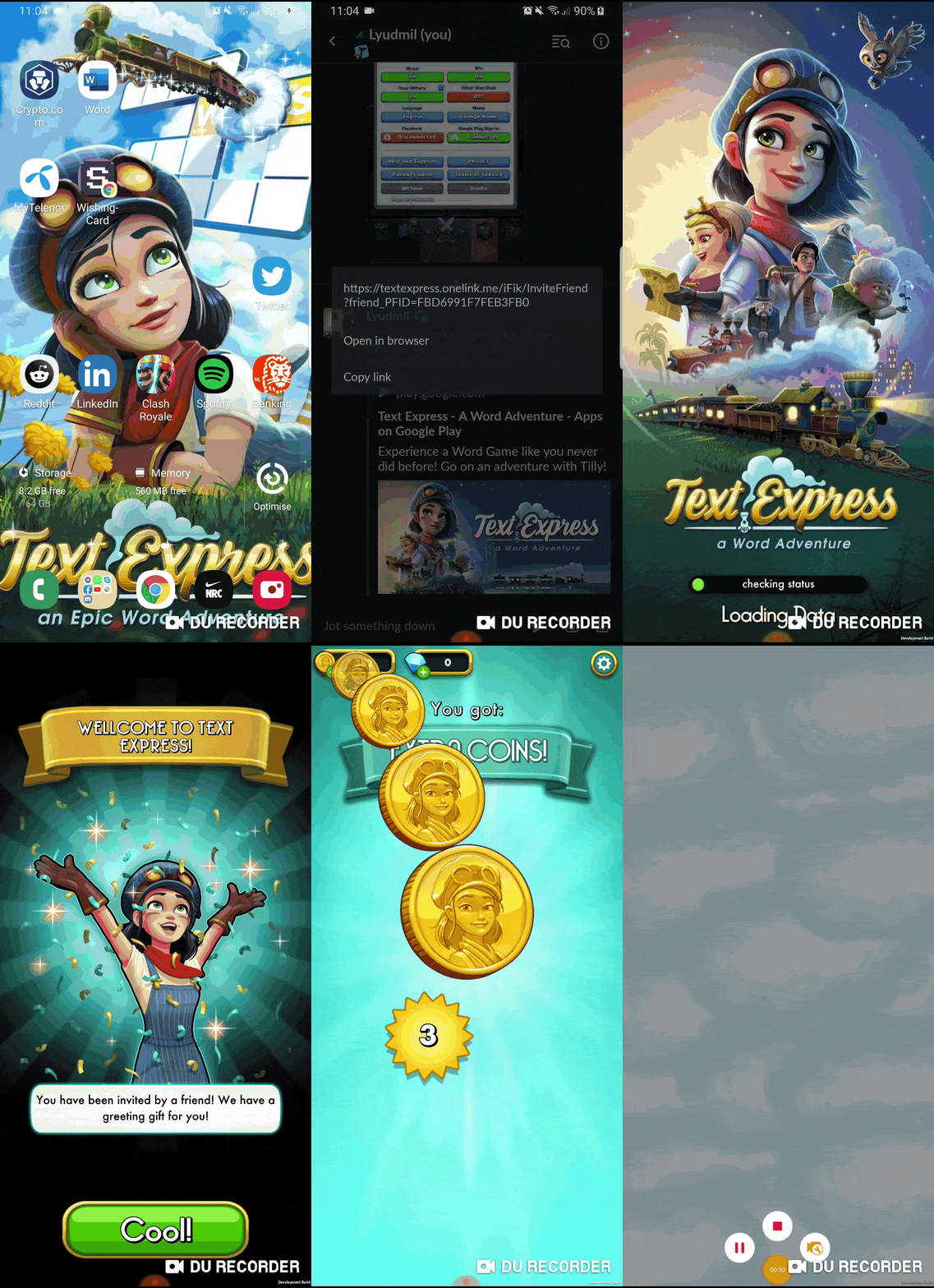
To support the organic growth of Text Express, I designed and implemented a friend referral system based on deep links.
The goal was to enable players to invite friends into the game through personalized links,
while automatically rewarding successful referrals. This feature transforms players into active promoters of the game,
leveraging word-of-mouth marketing and increasing retention through incentivized social interaction.
The system allows deep links to be dynamically generated in-game, embedding the inviter’s identity and referral context.
When a new player installs and launches the game via such a link, the referral is validated and rewards are granted in a secure,
backend-driven flow aligned with existing PlayFab data constraints. The result is a scalable,
designer-friendly referral mechanism that requires no client updates to adjust rewards or behavior.
You can read more about how I built that in the design document for Friend Referrals.
To improve player retention and strengthen communication between the game and its audience,
I integrated a remote push notification system into Text Express. Prior to this work, the game relied solely on local,
time-based notifications hard-coded in the client, which significantly limited flexibility and required client updates for any change.
The new system enables developers and designers to send dynamic push notifications at any time,
without modifying or redeploying the game. Notifications can be triggered remotely, targeted to specific player groups,
and aligned with live game events or player actions, creating a more responsive and engaging player experience.
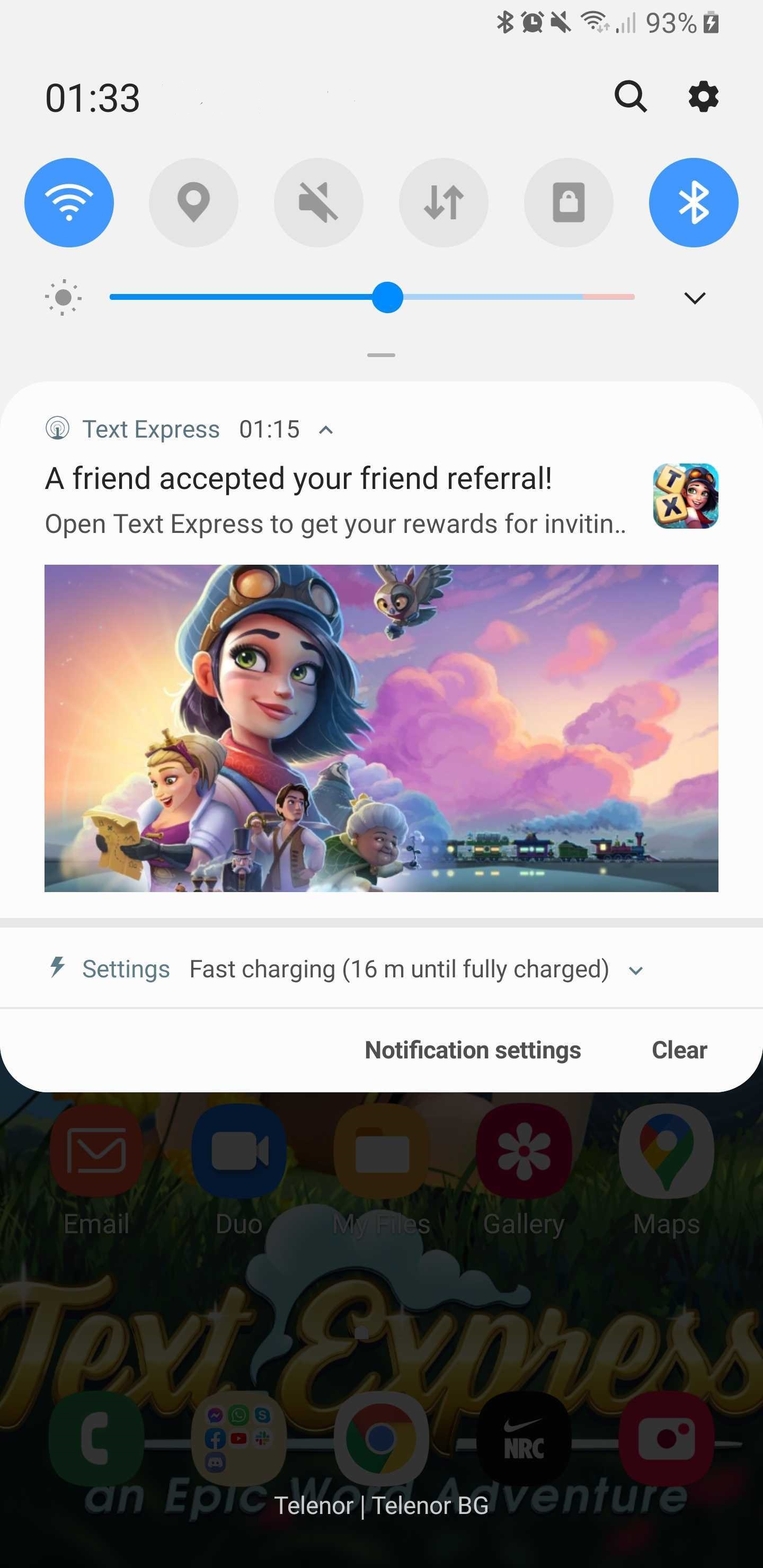
As part of the implementation, push notifications were integrated with existing gameplay systems—most notably the Friend Referral
flow—so that players are immediately informed when a reward becomes available. This closes the feedback loop between player actions
and rewards, increasing re-engagement and reinforcing positive player behavior.
You can read more about how I built that in the design document for Push Notifications.
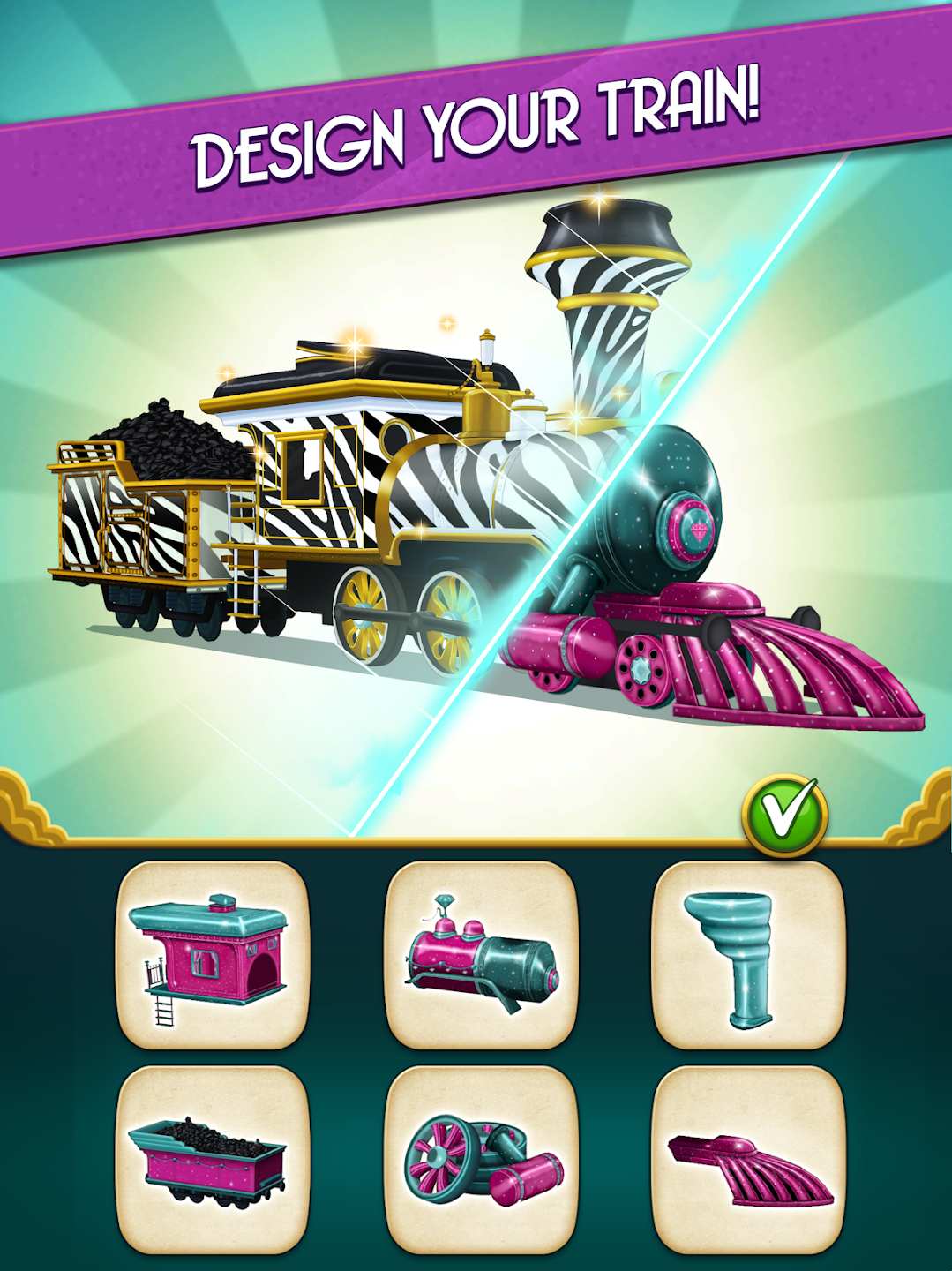
I developed a modular train customization system that allows players to unlock and spend in-game currency on visual customization items.
The system supports six independently configurable train parts—cowcatcher, body, roof, wheels, chimney, and
back trailer—enabling flexible mixing and future content expansion without changes to core logic.
My work focused on building a high-quality interaction and presentation layer.
I implemented smooth, responsive animations to make equipping and previewing items feel impactful and rewarding,
and designed camera controls that allow the train to be inspected comfortably from multiple angles.
This ensures that every customization choice is clearly visible and feels meaningful to the player.
The result is a polished, extensible customization experience that improves player
engagement through strong visual feedback, intuitive controls,
and a satisfying reward loop tied directly to progression.