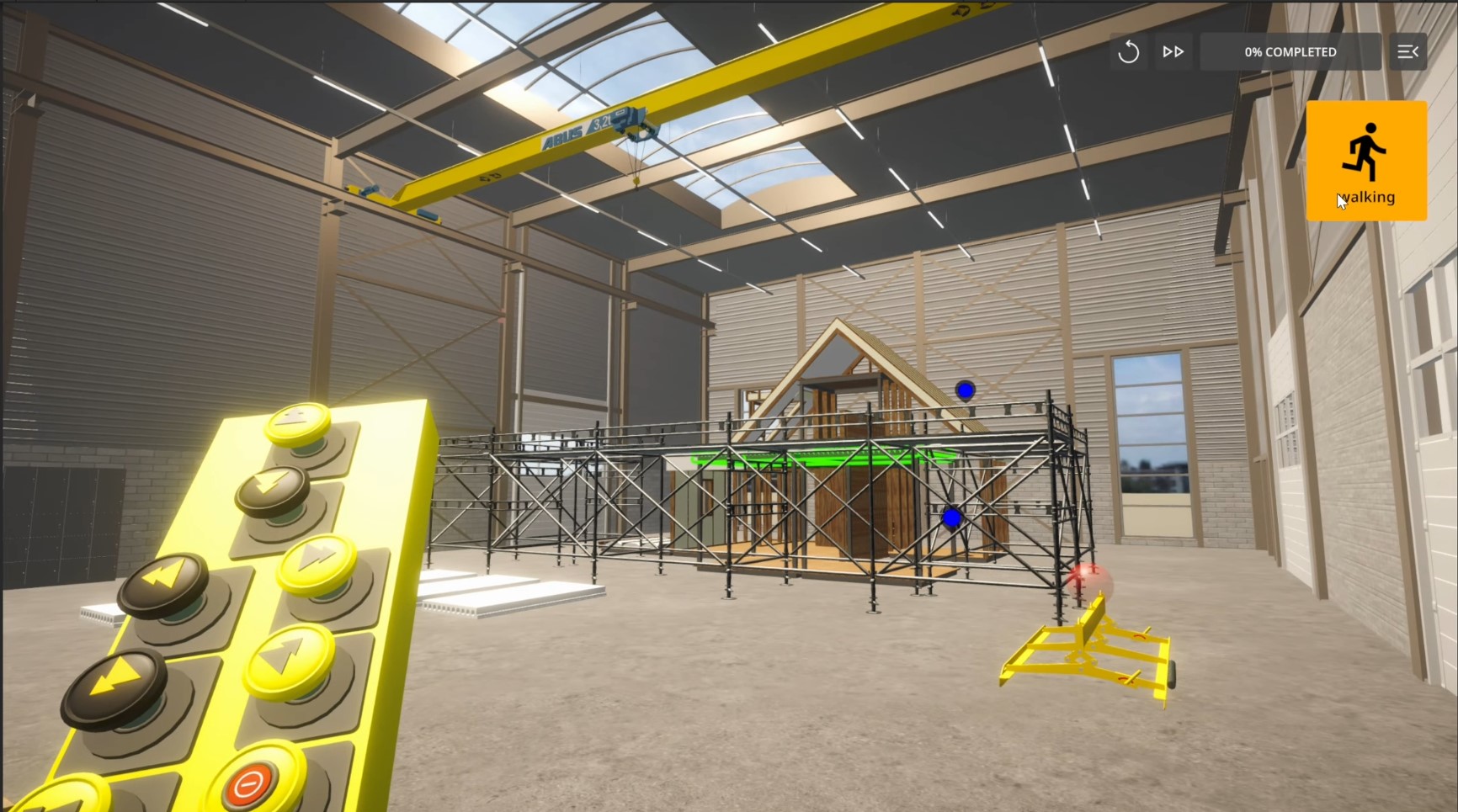
Key Skill Achievements
Project Info
🎯 Project goal: Train and evaluate students on how to operate a crane
👨👨👧👧 Target audience: Construction students (MBO)
📺 Platform: Meta Quest 3 & PC
👩🏻💻 Language: C#
⏳ Timeline: 3 months
Introduction
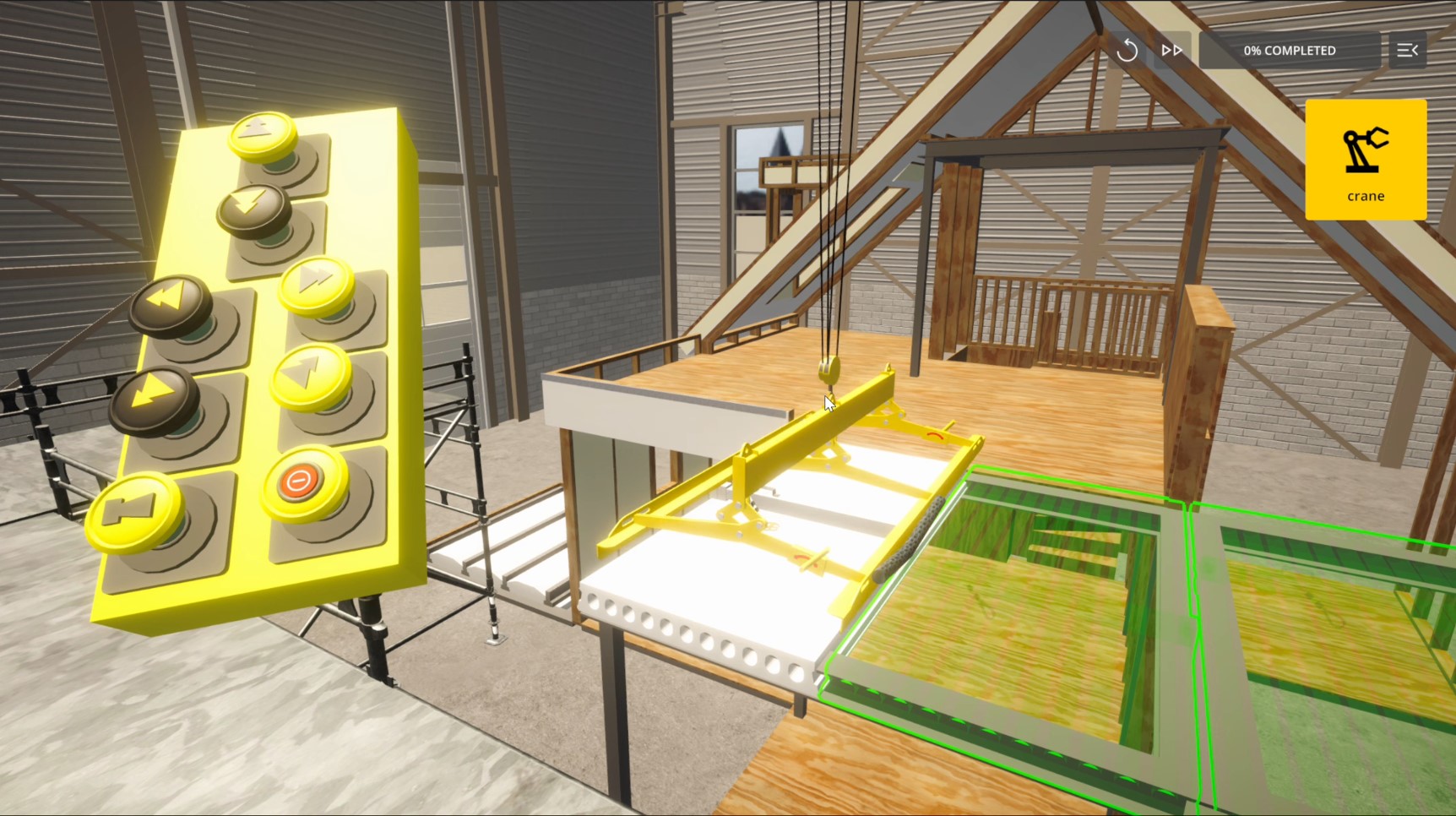
This VR simulation was developed to train crane operators on safe operational procedures and environmental awareness.
Students are guided through the process of securing a work perimeter, equipping themselves with proper safety gear
(helmet, gloves, harness, etc.), and preparing the cargo for safe lifting.
The simulation emphasizes hands-on practice of correct crane operation techniques, including precise cargo handling,
movement control, and adherence to safety protocols. By immersing students in realistic scenarios, the system ensures
they internalize safety habits and proper equipment use before entering real-world environments.
Gameplay:
My contributions:
Designed and implemented a distance meter as part of the Spatial UI system, providing real-time visual feedback on crane positioning and object proximity. The in-world placement allowed trainees to maintain focus on the environment rather than shifting attention to screen-space UI, improving situational awareness and engagement during training.
Implemented a controlled teleportation system tailored for training environments,
allowing users to safely reposition themselves within the worksite.
The navigation flow was intentionally designed to minimize VR discomfort and motion sickness,
avoiding artificial locomotion while preserving spatial awareness.
The system also respected safety boundaries and training constraints,
ensuring users remained within valid operational zones at all times and reinforcing
correct real-world safety behavior during training.
Led planning and coordination by breaking down training requirements into clear, practical features
based on real-world crane operation workflows.
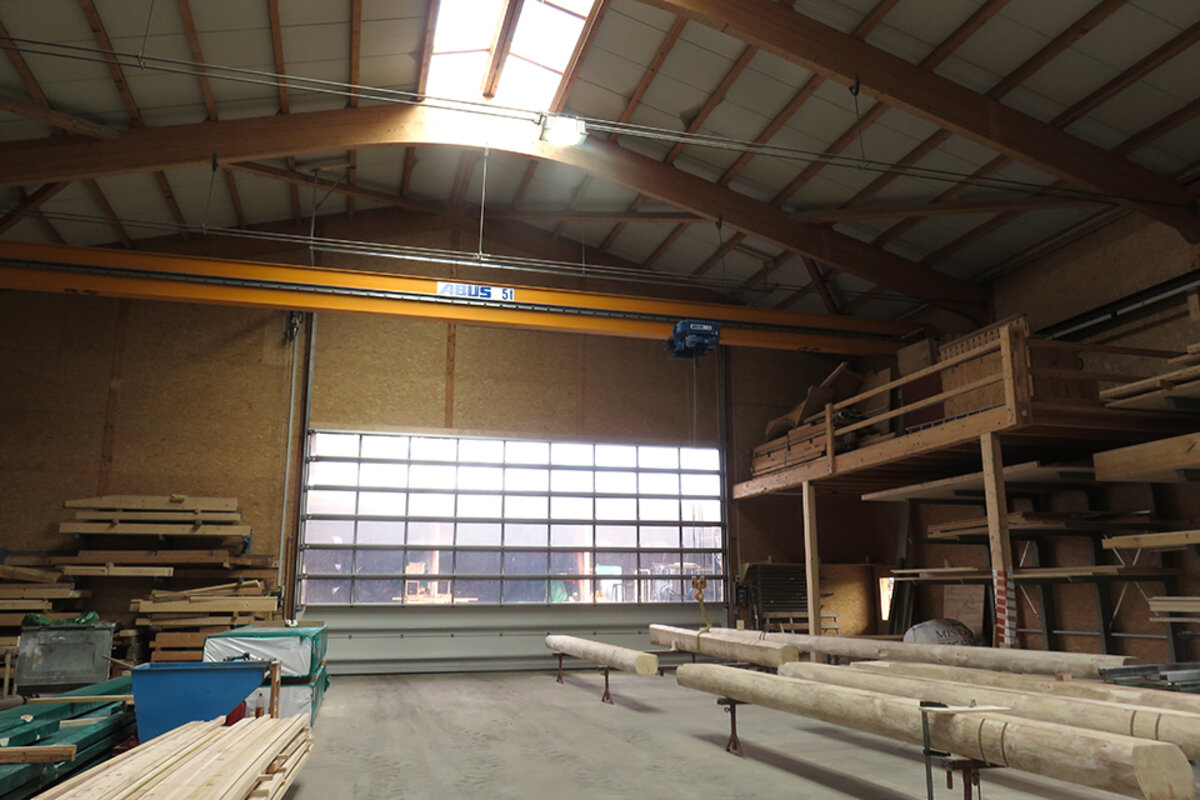
To ensure accuracy, I visited the training location in person, studied the crane and the hall,
took reference photos, and recreated the environment in Unity so the VR simulation closely matched
the real working conditions.
I managed the project end-to-end by defining epics, user stories, and sprint plans,
maintaining technical documentation, and overseeing scope, timelines, and budget constraints.
Continuous collaboration with stakeholders ensured the final VR simulation met
safety standards, educational objectives, and delivery expectations.